AI Agents on Real Data.
Zero Cleartext Exposure.
Almure runs sensitive workloads inside hardware-level confidential enclaves — so banks and hospitals can deploy AI without regulated data ever leaving the encrypted boundary.
Regulated data is off-limits to AI — until now.
AI agents need real data to generate real value. Transaction histories, patient records, credit files. But every cloud AI pipeline presents the same compliance roadblock: the inference layer can see the data in plaintext, even if it's encrypted at rest and in transit.
Compliance teams at banks and hospitals have to say no — not because the model is untrustworthy, but because the infrastructure around it isn't. The cloud provider's host OS, the orchestration layer, and the model serving runtime all have theoretical access.
Confidential computing closes this gap at the hardware level. Data enters an attested enclave, decrypts only inside verified CPU memory, and the result exits — with a cryptographic proof that nothing outside the boundary touched the plaintext.
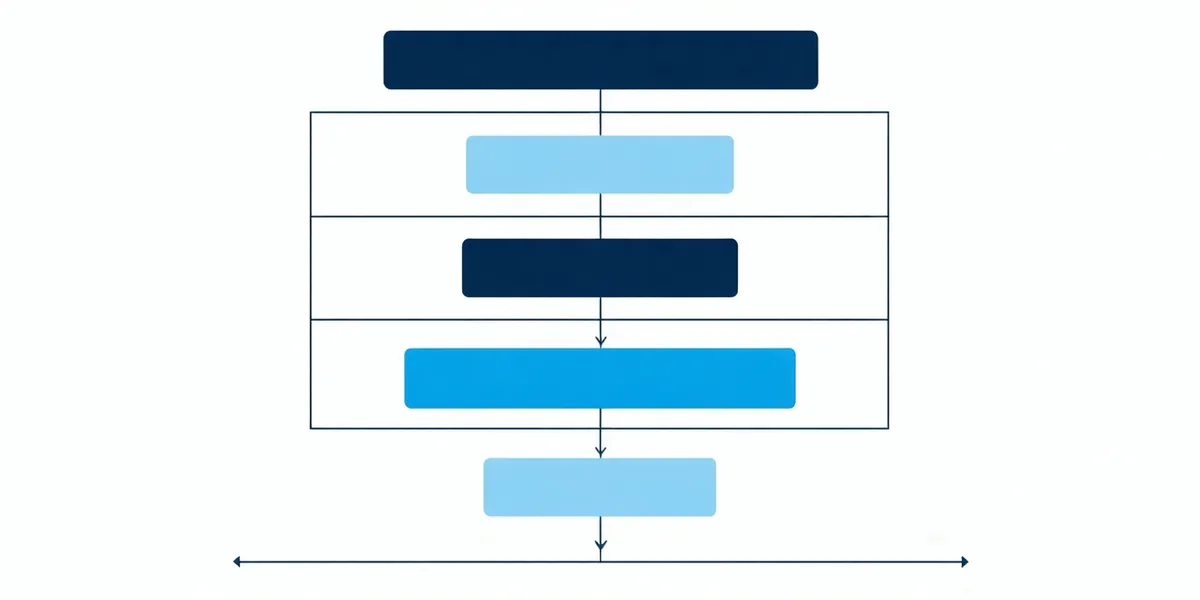
Standard pipeline vs. enclave pipeline
Standard cloud AI
Almure enclave pipeline
How It Works
The Almure Enclave Pipeline
Workload enters the enclave boundary
Your containerised workload is cryptographically measured and loaded into a hardware-isolated memory region. The host OS, hypervisor, and cloud provider gain no visibility into the execution context.
Data decrypts only inside verified memory
Sealed keys are derived during enclave initialisation and never exist in the clear outside the boundary. Data is decrypted at the hardware memory-controller level — no plaintext path to the host.
Encrypted result exits — attestation receipt included
The output is re-encrypted before leaving the enclave. Every execution produces a hardware-signed attestation report — measurement hash, code version, and enclave configuration — suitable for compliance audit submission.
Platform Architecture
The full Almure stack
Drop-in SDK
Integrate with your existing Python, Node, or Go workload in a single configuration change. No code rewrite required.
Multi-cloud TEE substrate
Runs on Intel TDX (bare-metal and GCP), AMD SEV-SNP (Azure, AWS), and AWS Nitro Enclaves. Your workload, your cloud choice.
Sealed key lifecycle
Keys are derived inside the enclave during initialisation, sealed to the measurement hash, and rotated automatically without ever existing in the clear outside the boundary.
Use Cases
Built for regulated AI workloads
Banking & Finance
Transaction anomaly detection and credit scoring on live data — without the inference host gaining plaintext access. Attestation logs designed with FISC and APPI technical-control requirements in mind.
Learn moreHealthcare
Clinical summarisation and diagnostic support on real EHR records — the model runs inside the enclave boundary, the 4-hour de-identification preprocessing step disappears. Attestation report supports APPI 要配慮個人情報 accountability.
Learn moreRegulated Enterprise
ML inference on subscriber, claims, or operational data without data masking pipelines. The enclave measurement + attestation report answers the data-governance question that blocks approval — by construction, not by policy.
Learn moreFrom practitioners
What compliance teams say
The attestation log from Almure was the thing that finally got our compliance team to sign off on using live transaction data in the AI pipeline. We could show the enclave measurement hash matched our approved build — that's auditable proof, not a policy promise.
Head of Data Security Architecture
Regional Japanese city bank
We'd been doing static de-identification before every model run — a 4-hour preprocessing step that lost half the signal. Running inside Almure's enclave, the inference sees the real record and the data never leaves the boundary. The compliance team treats the attestation report the same as a hardware HSM audit.
Platform Engineering Lead
Healthcare AI group at a regional medical network
Ready to move your AI pipeline into the enclave?
We work with regulated-industry teams to scope and pilot Almure on your specific workload — starting with a 30-minute technical call.